





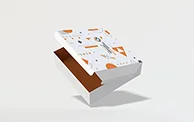



A corrugated box is a container made from corrugated cardboard, which consists of two flat linerboards around one fluted, wavy medium.
This three-layer construction gives more durability, cushioning, and resistance against transit damage than simple cardboard. That’s why corrugated boxes are a preferred choice for shipping companies for shipping products across vast distances.
The strength of this corrugated box depends on its liner material, flute grade, and wall construction.
There’s so much to learn about these shipping boxes that our subject-matter experts here at Premier Custom Packaging UK decided to compile and curate one of the most comprehensive, up-to-date guides you might come across.
This guide explains:
- What corrugated boxes are, how they are tested, and how they are different from cardboard
- Which liner and flute types are available
- How their wall constructions and box styles differ
- What standard box sizes they come in
- How to choose and estimate their weight capacity
- What is a box maker’s Certificate and why it matters
- Applications, pros and cons of a corrugated box
And more…
Let’s take a deep dive to learn more about these corrugated, aka heavy-duty boxes.
Key Takeaways
- Corrugated construction protects products during shipping by combining two linerboards with fluted medium that resists compression, impact, and crushing.
- Flute profiles affect cushioning, stacking strength, and print quality; A-flute cushions, C-flute balances strength, while E- and F-flutes support printing.
- Wall construction determines load-bearing capacity; single-wall uses one flute, double-wall adds another layer, and triple-wall supports heavy-duty shipping applications.
- Linerboard grades affect strength, durability, cost, and printability; kraft uses more virgin fibre, while test liner uses more recycled fibre.
- Box dimensions, weight, fragility, stacking load, shipping distance, and distribution conditions determine flute profile, board grade, wall construction, and protection.
- Corrugated testing measures compression, crushing, bursting, and edge strength; ECT measures stacking, FCT measures flute crushing, and Mullen measures bursting.
- Corrugated box is recyclable, printable, and customisable, but untreated fibreboard can lose strength when exposed to moisture or high humidity.
What Is a Corrugated Box?
A corrugated box is a container made from sheets of corrugated cardboard. Its sturdy layered construction is the reason these boxes are used for shipping large, heavy, fragile, and general merchandise products.
Surprisingly, 95% of all shipped products in North America use corrugated material.
The construction of a corrugated box can be adapted to the product and application by changing the liner material, flute grade, wall construction, box dimensions, structural style, and interior inserts.
What Is a Corrugated Cardboard?
Corrugated cardboard, aka corrugated fibreboard or corrugated cartons, consists of three layers of kraft paper: two outer layers of flat linerboard and an inner layer of fluted, wavy medium.
The linerboards form the flat surfaces of the board, and the fluted medium creates the internal structure. This combination provides protection and structural strength that a single sheet of paperboard does not provide.
Pizza boxes are a common example of this corrugated cardboard packaging stock. Additional linerboards and fluted layers can also be added when a package requires greater protection or load-bearing strength.
What Is the Difference Between Cardboard and Corrugated Cardboard?
Cardboard and corrugated cardboard are different packaging materials with different structures and performance characteristics.
Cardboard is generally made from paper stock or heavy paper pulp. It is commonly used for folded cartons containing smaller products, although cardboard can also provide structural support inside a package. On its own, cardboard provides less protection than corrugated board.
Corrugated cardboard consists of flat linerboards combined with a fluted medium. The fluted construction increases durability, cushioning, stacking resistance, and structural strength, which makes these heavy-duty boxes suitable for shipping and applications that require greater protection.
Corrugated boxes are one type of cardboard packaging, but the term cardboard box can also refer to folding cartons and rigid boxes. Folding cartons are commonly used for retail products, while rigid boxes are used for applications requiring a more substantial box structure.

What Materials Are Used for Corrugated Box Liners?
Linerboard forms the flat outer or inner surface of corrugated board. The main liner materials discussed here are Kraft paper, test paper, and flute paper liners.
Kraft Paper Liners
Kraft paper liners consist of 70–80% “virgin” chemical pulp fibre. This produces a stiff and durable paper grade.
Kraft is described as the most sustainable option among the corrugated paper materials discussed here, but it is also the most costly.
Test Paper Liners
Test paper liners contain more recycled fibre than Kraft paper, which makes them less expensive. The higher recycled fibre content results in less durability and can make the paper more difficult to print.
Test paper is commonly used as the inner linerboard of a corrugated box.
Flute Paper Liners
Flute paper is available in Semi-Chem and Waste Based Fluting.
Semi-Chem uses virgin fibres and a neutral sulphite semi-chemical process. Waste Based Fluting uses 100% recycled fibres.
The choice of liner therefore affects the balance between durability, recycled content, cost, and printability.

What Are the Different Corrugated Flute Types?
Corrugated flute is the wavy medium between linerboards. Flute grade affects cushioning, compression resistance, crush resistance, stacking performance, thickness, and printability.
A-Flute
A-flute is 1/4″ thick and is the largest flute size discussed here. Its larger profile provides high protection and cushioning and performs well under compression and stacking conditions.
A-flute is often used for fragile products where cushioning is an important requirement.
B-Flute
B-flute is 1/8″ thick. It is thinner than A-flute but provides strong puncture and crush resistance.
B-flute has broad packaging applications and can also be used for padding and dividers. Its relatively flat surface supports higher-quality printing and easier die-cutting.
C-Flute
C-flute is 3/16″ thick and is one of the most versatile corrugated flute grades. It provides average crush resistance, stacking strength, and printing properties.
C-flute is commonly used for shipping boxes and packaging for glass, dairy, furniture, and other products.
E-Flute
E-flute is 1/16″ thick and is not typically used for shipping. Its thinner construction makes it an alternative to paperboard folding cartons.
E-flute can be used for cosmetics, fragile glass, ceramics, and other small or delicate products. It provides excellent compression strength and crush resistance while providing a relatively flat surface for high-quality printing.
F-Flute
F-flute is 1/32″ thick. It provides protective properties similar to E-flute while producing an even smoother printing surface.
F-flute is common in clamshell packaging. fast-food industry and is also used in Europe for specialty and retail packaging.
How Do Corrugated Flute Grades Affect Box Performance?
Flute grade determines more than the thickness of a corrugated box. A-flute emphasizes cushioning and protection, B-flute provides puncture and crush resistance, C-flute provides versatile shipping performance, and E-flute and F-flute provide thinner structures with relatively flat surfaces for printing.
The appropriate flute therefore depends on the product and the required balance between cushioning, compression resistance, crush resistance, thickness, die-cutting, and printability.
What Are the Main Types of Corrugated Board?
Corrugated board combines linerboards and fluting in different layer configurations. The resulting construction determines the board’s thickness, flexibility, and strength.
Linerboard is the flat “face” of the fibreboard sheet. The flute is glued to the linerboard.
Single Face consists of one linerboard with the glued flute visible on one side. It is sometimes called corrugated paper.
Single Wall is the most common construction. It consists of two linerboards with one fluted fibreboard layer glued between them.
Double Wall consists of three linerboards and two fluted fibreboard layers.
Triple Wall consists of four linerboards and three fluted fibreboard layers. It can withstand heavier weights of almost 300 lbs, although the additional layers make the triple-wall board less flexible.
Double-wall and triple-wall constructions can also combine different flute grades to create specific performance characteristics.
What Is AC Flute?
AC Flute combines two highly protective corrugated grades and is suited to applications requiring additional protection during harsh shipping and handling.
What Is BC Flute?
BC Flute combines B-flute and C-flute construction to provide all-around performance and high-level transit protection. It is commonly used for shipping boxes.
What Is EB Flute?
EB Flute combines E-flute with another corrugated flute to provide transit strength while maintaining a printable outer surface. The outer E-flute creates a surface suited to high-quality printing.
What Are the Common Corrugated Box Styles?
Corrugated box styles determine how a package is folded, assembled, closed, handled, and presented. Common styles include:
- Tab Lock Roll End
- Roll End 3 Flaps Tuck
- Roll End Tuck Front
- One Piece Folder Box
- Tuck Top Auto Bottom
- Regular Slotted Box
- Full Slotted Box
- Half Slotted Container (HSC Box)
- Gusset Folder
- Regular Slotted Container (RSC)
- Full Overlap (FOL) box
- Mailer box
- Telescoping box
- Folder-type box
- Auto-lock bottom box
What Is an RSC Box?
A Regular Slotted Container (RSC) is a corrugated box whose flaps meet at the centre when the box is closed. RSC boxes are commonly used for shipping because their structure provides a straightforward method of forming and closing the carton.
What Is an FOL Box?
A Full Overlap (FOL) box has outer flaps that fully overlap when closed. This construction provides additional strength compared with standard flap configurations.
What Is a Telescoping Box?
A telescoping box uses separate top and bottom sections. The two sections fit together to create the finished package.
What Is a Folder-Type Box?
A folder-type box is formed from a single piece of corrugated board. The board is folded along its structural creases to form the package.
Mailer and auto-lock bottom styles provide additional structures for retail, shipping, and product packaging applications.
Custom corrugated boxes can combine these structural styles with custom dimensions, flute grades, printing, wall constructions, and inserts to meet specific packaging requirements.

What Are Standard Corrugated Box Sizes?
Corrugated box dimensions are commonly listed as Length × Width × Depth (L × W × D), with measurements generally referring to the usable interior space of the box.
Standard corrugated box sizes range from approximately 6 × 4 × 4 inches to 24 × 18 × 18 inches.
Common Smaller Sizes
- 6 × 4 × 4 inches
- 6 × 6 × 6 inches
- 8 × 6 × 4 inches
- 10 × 8 × 6 inches
These sizes are suited to compact products.
Medium Box Sizes
- 12 × 9 × 6 inches
- 12 × 12 × 12 inches
- 14 × 10 × 8 inches
- 16 × 12 × 8 inches
These dimensions can be used for products such as books, shoes, electronics, apparel, and kitchen appliances.
Larger Box Sizes
- 18 × 18 × 16 inches
- 20 × 16 × 12 inches
- 24 × 18 × 18 inches
These provide more space for bulky products.
Speciality corrugated box dimensions can also be longer or wider than standard shipping cartons. The required dimensions depend on product size, protective materials, available storage space, and shipping requirements.
When selecting dimensions, the usable interior space should account for the product and any cushioning or packing materials placed around it.

How to Select the Right Corrugated Box?
The right corrugated box depends on product dimensions, weight, fragility, required protection, shipping conditions, and packaging design. Box size, flute grade, wall construction, and box style should be considered together.
Product dimensions determine the required interior space. Product weight and stacking requirements influence the board construction and strength needed. Fragile products may require a larger flute for additional cushioning, while products requiring a flatter printable surface may be better suited to E-flute or F-flute.
Box style also affects how the package is assembled, closed, handled, and presented. RSC (reverse slotted carton) boxes are common for shipping, while mailer, folder, auto-lock, and other die-cut styles support different product and retail packaging requirements.
A Practical Selection Process
- Measure the product to establish the required interior dimensions.
- Account for cushioning and packing material around the product.
- Consider product weight and stacking requirements when selecting wall construction and board strength.
- Choose the flute grade based on cushioning, crush resistance, compression, and printability requirements.
- Select the box style based on assembly, closure, handling, shipping, and presentation requirements.
- Consider moisture and shipping conditions before finalising the board construction.
How Much Weight Can a Corrugated Box Hold?
A corrugated box’s weight capacity depends on its wall construction, board strength, dimensions, packing method, moisture exposure, and whether the box is new or previously used. Single-wall boxes generally support less weight than double-wall and triple-wall constructions.
Common references place single-wall boxes in the range of approximately 20–65 lbs and double-wall boxes around 60–150 lbs, while triple-wall boxes can support substantially heavier loads. Actual capacity varies by box construction and test rating, so these ranges should not be treated as universal carrying limits.
Edge Crush Test (ECT) measures the strength of corrugated board under edge compression and is associated with stacking performance. Box dimensions, board grade, moisture exposure, and packing method can also affect how much weight a finished box can safely carry.
A box rating such as “200#” should not automatically be interpreted as a 200 lb carrying capacity. The test rating describes the board’s tested performance, while the actual weight a finished box can hold depends on the complete box construction and conditions of use.
How Are Corrugated Boxes Tested for Quality?
Corrugated boxes experience stress and impact during packing, shipping, handling, and storage, so manufacturers use quality-control tests to evaluate board strength and durability.
Three standard tests discussed here are the Edge Crush Test (ECT), Flat Crush Test (FCT), and Mullen Burst Test.
What Is the Edge Crush Test?
Edge Crush Test (ECT) applies force perpendicular to the edge of corrugated cardboard until the board buckles. The result indicates the board’s edge strength and its ability to handle heavy loads and stacking.
What Is the Flat Crush Test?
Flat Crush Test (FCT) applies force directly to the surface of corrugated cardboard until the flute flattens and compromises the board’s structure. The test evaluates compression and stacking resistance.
What Is the Mullen Burst Test?
Mullen Test, or Burst Test, measures the force required to puncture the corrugated board surface. It is used to evaluate the durability of the board.
ECT, FCT, and Mullen Burst Test results therefore provide different information about compression, crush resistance, puncture resistance, and overall board performance.
What Is a Box Maker’s Certificate?
A Box Maker’s Certificate (BMC) provides key specifications about a finished corrugated box. The BMC is available in two versions: an ECT-rated BMC and a Mullen-rated BMC.
Both versions provide information about the box and its manufacturer.
What Information Does a Box Maker’s Certificate Include?
Box Manufacturer identifies the company responsible for manufacturing the box.
Board Construction identifies whether the box is single wall, double wall, or triple wall.
Minimum Combined Weight Facings identifies the total weight of the linerboard used before the linerboard is cut and converted into boxes.
Size Limit identifies the maximum outer measurements of the box for storage and shipping purposes.
Gross Weight Limit identifies the maximum permitted weight of the box and its contents.
City and State identify where the box is constructed and shipped.
The BMC therefore connects the finished corrugated box with its manufacturer, board construction, tested rating, dimensions, and permitted weight information.
What Are Corrugated Boxes Used For?
Corrugated boxes are commonly used for shipping, product packaging, moving, storage, and organisation. Their combination of structural strength, cushioning, customisable dimensions, and multiple box styles makes them suitable for products ranging from small retail items to large or heavy goods.
Shipping and E-Commerce
Shipping and e-commerce are common applications because corrugated boxes can be produced in different flute grades, wall constructions, dimensions, and box styles.
Moving and Storage
Moving and storage applications use corrugated boxes for clothing, books, files, household products, and other stored items.
Interior Packaging and Secondary Uses
Corrugated cardboard can also be used for interior dividers, padding, shelf organisation, crafts, gardening applications, and other secondary uses after its primary packaging function.
How Should You Pack Items in a Corrugated Box?
Proper packing helps a corrugated box protect its contents during handling and transportation. Start with a securely taped box base, add cushioning to the bottom, place heavier items below lighter items, and wrap fragile products individually.
Fill empty spaces with suitable packing material so products do not move freely inside the box. Avoid overfilling the box or placing excessive weight into a carton that is not designed to support it.
After packing, seal the top and seams securely with packaging tape. The product should fit inside the box with enough space for protective material without leaving large unfilled areas.
Packing requirements can therefore affect the box dimensions, flute grade, and overall construction selected for a product.
What Are the Benefits of Corrugated Boxes?
These boxes combine structural protection, recyclability, and customisation, which makes them suitable for a wide range of packaging applications.
Protection and Durability
These sturdy boxes provide protection during transit by absorbing impacts and providing cushioning support. Their layered structure helps them withstand demanding shipping conditions and protects packaged contents.
Environmental Benefits
Corrugated cardboard is made using recycled fibres, which makes it easier to recycle and supports its use as a packaging option when sustainability is a priority.
Customisation
They can be customised through raw materials, shapes, thicknesses, graphics, surface printing, structural designs, dimensions, and inserts. These options allow corrugated boxes to be adapted to specific product and packaging requirements.
What Are the Disadvantages of Corrugated Boxes?
These boxes have limitations despite their protective and customisable construction.
Limited Weather Resistance
They are susceptible to inclement weather, including rain and snow. Exposure to moisture can deform the packaging or cause it to lose its shape.
Cost Considerations
Corrugated cardboard can be more expensive than other packaging options. The source attributes this higher cost to supply-chain disruptions, such as those caused by COVID-19, and environmental regulations related to deforestation and sustainable forestry.
For companies with lower packaging budgets, these costs can be a concern. The cost therefore needs to be considered alongside the protection, recyclability, versatility, and customisation that these corrugated box packaging provides.
Where Corrugated Boxes Fit into Custom Packaging
Corrugated boxes use layers of paper with a fluted middle layer that gives the box strength without adding unnecessary weight.
The flute profile, paper grade, and liner affect how the box handles shipping, stacking, storage, printing, cost, and recycling.
If you’re choosing these heavy-duty boxes, we can help match the board structure and box style to your product, shipping needs, quantity, and budget.
Premier Custom Packaging UK has been making custom packaging for about a decade and has worked with thousands of small and mid-sized businesses.
Exact board specifications vary by manufacturer and region, so for a purchasing decision, ask your supplier for the technical data sheet of the specific corrugated board grade.
Editorial note: This guide was prepared by Premier Custom Packaging UK’s editorial team with technical input from packaging subject-matter experts.
Share on:


